Waterdrop TSA Reviews: See Why 0 Shoppers Rated It 0 Stars!
The Waterdrop TSA water filtration system earned a 0/5, but not everyone agrees. See what 0 users think about these Waterdrop Filters water filtration systems — from unexpected wins to dealbreakers.
 Supermod
  Moderator
 Recaptor
 Waterdrop TSA Review: A Compact, No-Frills Under-Sink Filter That Focuses on the Essentials
The Waterdrop TSA (model WD-TSA-10) is a quietly ambitious entry in the crowded world of home water filtration. It's designed for people who want cleaner, better-tasting tap water without the bulk, wiring, or fuss of a powered system. As an under-sink filter with a compact footprint, it promises multi-stage filtration and straightforward DIY maintenance at a budget-friendly price. That being said, it's not trying to win a lab-grade purity contest; it's trying to be "good enough" for everyday kitchens and office pantries while keeping setup simple.
Detailed Specs & Features
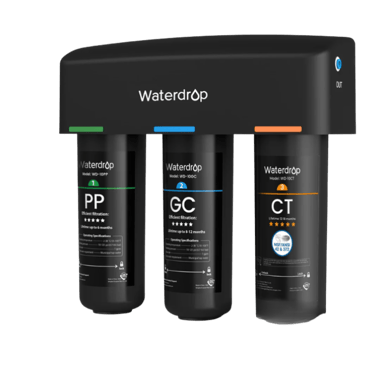
At its core, the TSA is an under-sink unit configured for under-sink installation with a vertical orientation. The system uses three filtration stages, combining a blend of carbon, KDF, activated carbon, carbon block, and sediment filtration. On paper, this mixed-media approach targets a broad set of contaminants commonly associated with taste and odor, as well as certain heavy metals.
Waterdrop positions the TSA as a multipurpose solution suitable for households and small office kitchens. The spec sheet lists reductions for a long roster of contaminants, including lead, chlorine, fluoride, PFOS/PFOA, TDS, heavy metals, sediment, microplastics, odor, rust, and cysts. It also calls out headline removal rates like 99% chlorine reduction, 99% bacteria removal, and 99% VOC and pesticide reduction, which, if achieved, would be impressive for a small, non-powered system. One note of caution: there's an internal inconsistency where "microplastics reduction" is separately marked as "No" even though microplastics appear under the contaminant list; readers should treat that specific claim as ambiguous.
Flow and capacity are modest by design. The TSA is rated for a 0.1 gal/min flow rate and an 8-gallon daily filtration capacity. That's slow compared to high-throughput under-sink systems, but it tracks with the TSA's compact form factor and multi-stage approach. Water pressure requirements are pretty specific: Waterdrop lists a minimum of 50 psi and a maximum of 80 psi. In other words, it's happiest on a municipal line with decent pressure rather than a low-pressure well setup.
Longevity looks reasonable for light-to-moderate use. Waterdrop suggests a 12-month filter replacement interval and highlights tool-free cartridge changes that can be done in roughly three minutes. There's also a one-year coverage noted under the brand's limited warranty, which is typical at this price tier.
Design & Build
Physically, the TSA opts for a compact, vertical chassis that fits neatly under most sinks. The black, matte plastic housing keeps the look subtle and office-friendly. Brass is used where it counts: valves and check valves, while the tubing adheres to common 3/8-inch standards for easy integration with existing plumbing. There's a stated 400-psi housing pressure rating, which is well above the operating range and provides a comfortable safety margin.
The system doesn't require electricity; it runs purely on line pressure. That means fewer points of failure and no outlets to find, but also no booster pump to help if your line pressure is on the low side. Waterdrop calls out a 30 dB noise level, which is essentially negligible in practice; most of the time, you won't hear anything beyond the regular sound of water flow when dispensing.
Performance
How does the Waterdrop TSA likely perform day to day? On paper, the multi-stage stack should be excellent for taste and odor; chlorine and VOC reduction are the headline features. The KDF media contributes to heavy-metal reduction and can inhibit microbial growth within the filter media itself. If your biggest complaints are "my water smells like a swimming pool" or "there's a metallic tang," the TSA's cocktail of carbon block and KDF is aimed squarely at that.
Where expectations need to be managed is throughput. A 0.1 gpm flow rate is slow; filling a large pot will take patience. The 8 gallons per day rating is plenty for a couple or a small family that primarily uses filtered water for drinking and light cooking, but less ideal if you dispense large volumes frequently. Interestingly, the spec sheet references a 2:1 "system recovery rate," a term more commonly associated with reverse osmosis. Because the TSA doesn't list an RO membrane, it's likely best to treat that figure as a rough efficiency note rather than a literal RO recovery metric.
The contaminant claims are ambitious for a compact unit. The inclusion of PFOS/PFOA and fluoride on the reduction list will raise eyebrows, as those are notoriously challenging to address fully. Without a published NSF/ANSI performance listing for those specific reductions, consider them strong targets rather than iron-clad guarantees. The presence of NSF/ANSI 42 and 372 certifications is reassuring (taste/odor and material safety), and WQA recognition adds credibility to the construction and materials story.
Everyday Usability
Installation should be approachable for the average DIYer: quick-connect fittings, an included kit, and no electrical work. The brand estimates about thirty minutes for installation, and the vertical cartridge design means replacements are painless. That low-maintenance posture is arguably the TSA's biggest day-to-day win; no app to babysit, no power bricks to hide, no priming cycles to remember.
That said, the minimum pressure requirement of 50 psi is non-negotiable. If your building's water pressure dips below that, expect slower flow or inconsistent performance. The system also doesn't include a dedicated brilliant faucet or indicator lights, so you'll be relying on time-based intervals or taste cues to plan filter changes. For many users, that's a fair trade for a lower sticker price and simpler design.
Extra Features
There's no UV sterilization, remineralization, or smartphone integration here. Instead, you get a familiar, conventional stack of media focused on taste, odor, and metals. The housing is BPA-free, corrosion-resistant, and uses food-grade materials. It's a pragmatic, parts-are-available-internationally design aimed at being easy to live with rather than flashy.
Pros & Cons
Pros
- Compact, under-sink footprint with straightforward DIY installation and quick-connect fittings.
- Three-stage media stack emphasizing chlorine, VOC, and taste/odor reduction.
- Tool-free cartridge swaps with a 12-month suggested interval.
- No electricity required; fewer failure points and silent operation.
Cons
- Slow 0.1 gpm flow rate; filling large containers takes time.
- Contaminant list has inconsistencies (e.g., microplastics noted in one place, not in another).
- No smart indicators or faucet display to cue filter changes.
- Requires 50-80 psi line pressure for best results; not ideal for low-pressure setups.
Price & Value for Money
Value is where the Waterdrop TSA makes its strongest case. At this price, you're getting a neat package with multi-stage filtration, brass fittings where they matter, and a clean under-sink install that won't dominate your cabinet. The lack of frills keeps the costs down, and replacement filters are positioned at a "medium" cost tier in the spec sheet, which should help long-term ownership. At the time of writing, we've seen the TSA listed at $99.99 at WaterdropFilter.com. If your priorities are taste, odor, and general polish for municipal water, and you don't need high-volume dispensing, the TSA offers solid bang for the buck.
Who should skip it? Anyone expecting rapid flow for big batch cooking, those on low-pressure lines, or users who want hard proof of removal for complex contaminants like PFAS at specific NSF performance claims. In that case, a higher-end system (potentially with RO and a booster pump) may be a better fit, albeit at a higher price and with more installation complexity.
Quick Take
On paper, the Waterdrop TSA focuses on what most people actually notice: taste, odor, and chlorine, while keeping the system small and wallet-friendly. It's not a firehose, but it's tidy, quiet, and easy to live with.
If you value simplicity and don't mind a slower pour, this compact under-sink filter checks the right boxes for everyday drinking and cooking water.
Closing Recommendation
Based on the specifications and design choices, the Waterdrop TSA is a sensible pick for small households or office pantries looking for cleaner-tasting water without extra plumbing drama. The slow flow is the main compromise; everything else leans toward convenience and low maintenance.
If your line pressure is healthy and your expectations are realistic, the TSA's three-stage stack and simple upkeep make it an easy recommendation in the sub-$100 bracket.
Verdict
Rating: Based on the specifications and overall feature set, we believe Waterdrop TSA deserves 4.0 out of 5.
- Winner Feature => Multi-stage carbon/KDF stack that strongly targets taste, odor, and chlorine at a very approachable price.
- Needs Improvement => Slow 0.1 gpm flow and ambiguous claims around niche contaminants (e.g., microplastics) may limit confidence for some buyers.
Reviews 0
The good, the bad, and the brutally honest.Average Rating


More Water Filtration Systems 666
Unlock more awesome finds.